Humanizing data / measuring humanity
Those in post-academic careers need to push back against the idea that science and humanities are "two cultures."

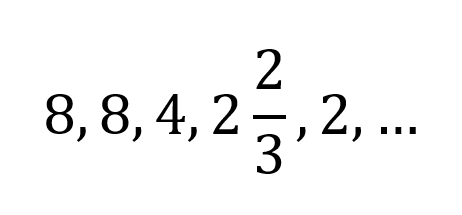
Here is a math problem for humanists. Complete this series (the answer is at the end of the post):
People ask me: "Music and math are related, right?"
I tend to answer, "Yes, somewhat. Music theory is applied math. But there is more to music than its theory. Actually, most fields of human activity have math in them somewhere..."
Every musician learns to understand octave equivalence through practical experience. This practical experience can also be analyzed as a logarithm with base 2.
The challenge comes when there is a relationship other than an octave between two pitches. It turns out that there is a very deep rabbit hole - both mathematical and historical - about what the fraction (2 + 2/3) in the series above represents and what the next item in the series will be. Entire books have been written about it.
The idea that the sciences and the humanities are "two cultures" goes back at least as far as the influential 1959 essay by C. P. Snow. We have all seen it: the humanist proud of their ignorance of math, or the scientist seemingly oblivious to the human implications of their research.
The truth is that data informs every humanly meaningful task today. The worlds of business, nonprofits, education, and human services are awash in data, no matter how touchy-feely the mission is. Finding ways to support the mission with the data is always a challenge.
Conversely, advances in science have major impacts on human values. To cite only a high-profile issue in current discourse, the development of large language models (LLMs) has had large impacts on what we value as important and how we marshal our resources to meet human needs.
It’s good to be an expert on human values. It’s also good to be an expert on the scientific method. What is needed today is the ability to inform one with the other.
Solution:
The series of numbers represents divisions of the number 8:
8 / 8 = 1
8 / 4 = 2
8 / (2 + 2/3) = 3
8 / 2 = 4
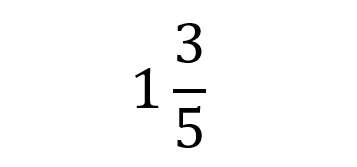
The fifth number in the series is